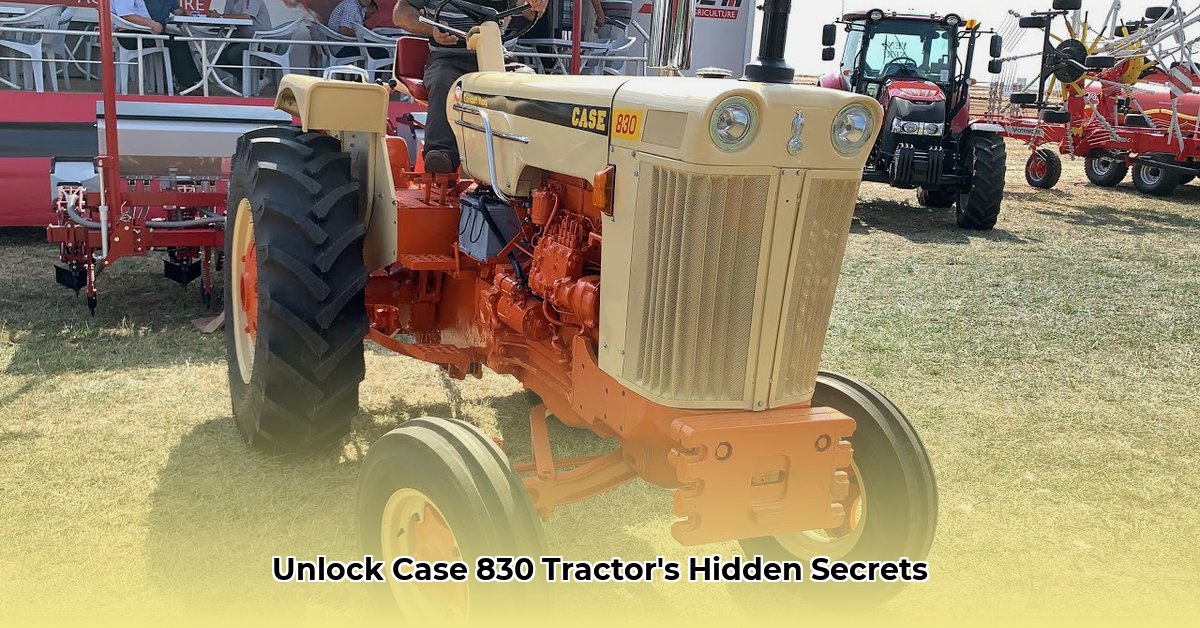
The J.I. Case 830 tractor, a stalwart of the 1960s agricultural landscape, remains a coveted piece of machinery for collectors and enthusiasts. This comprehensive guide delves into the Case 830's specifications, history, and restoration, providing valuable insights for all levels of expertise. Whether you're a seasoned collector meticulously searching for a rare variant or a newcomer captivated by its classic design, this guide will equip you with the knowledge to appreciate and preserve this iconic tractor.
Under the Hood: Engine Specifications and Performance
The Case 830's heart beats strong with a robust 4.9-liter, four-cylinder diesel engine. While the exact horsepower figures vary slightly depending on the source, it consistently delivered substantial power for its era – typically between 66 and 73 horsepower. This naturally aspirated engine provided reliable power crucial to the demands of daily farm operations. The engine's durability is a testament to its engineering, and its longevity in many working farms speaks volumes about this feature. Given the consistent power output, what specific agricultural tasks did the Case 830 excel at?
Transmission Options: Manual Dexterity vs. Torque Converter Ease
Farmers had a choice between two transmission options for the Case 830: an eight-speed manual transmission and a torque converter transmission. The eight-speed manual, offering precise control, appealed to experienced operators seeking a more hands-on, nuanced driving experience. However, the torque converter transmission provided smoother operation and easier gear changes, especially advantageous in challenging field conditions. This difference in driving feel likely influenced the farmer’s decision depending on their specific needs and farming experience. Considering the varied terrains and working conditions, how did the choice of transmission affect the efficiency and productivity of the tractor?
Hydraulic System: Powering Implements and Versatility
The Case 830 utilized an open-center hydraulic system, typically holding around 17 gallons of hydraulic fluid. This powerful system significantly enhanced the tractor's versatility, enabling it to handle a wide array of implements, from plows and cultivators to loaders and other attachments. This adaptability made the Case 830 suitable for various agricultural activities. Considering its open-center design, what were the key advantages and potential maintenance challenges of the Case 830's hydraulic system?
Braking System: Mechanical Precision and Torque Converter Considerations
The Case 830 featured mechanical, dry disc brakes as standard. However, models equipped with the torque converter transmission incorporated a wet disc clutch, impacting the braking system's operation. This subtle difference highlights the design evolution over time and serves as a key point of differentiation for collectors. Considering these variations, how did the braking system's design affect the overall operation and safety of the Case 830?
Variations and Models: A Collector's Detailed Guide
Case offered several variations of the 830 to suit diverse farming practices: standard-tread, row-crop, Western Special, and high-crop models. Each variant catered to specific needs, resulting in varying production numbers over the years. The scarcity of certain models adds significantly to the collector’s interest in owning and maintaining these unique tractors. What factors contributed to the variations in the Case 830’s design and production?
A Look Back: Operator Station and Technological Context
Compared to contemporary tractors, the Case 830's operator station was relatively basic. It lacked climate control, electronic monitoring systems, and other comfort and safety features common in modern machinery. However, its simplicity also simplifies restoration efforts. This feature makes it a more approachable restoration project for enthusiasts. Considering the technological limitations of its era, how did the Case 830's design reflect the agricultural practices and technological capabilities of the 1960s?
Case 830 Tractor Specifications: A Summary Table
| Specification | Description | Notes |
|---|---|---|
| Engine | 4.9L four-cylinder diesel | Naturally aspirated; robust and reliable for its time |
| Horsepower | Approximately 66-73 hp (varies slightly) | Actual horsepower varied depending on working conditions |
| Transmission | 8-speed manual or torque converter | Torque converter offered smoother operation, especially in tough conditions |
| Hydraulic System | Open-center | Approximately 17-gallon capacity; powered various implements |
| Braking System | Mechanical dry disc (standard); wet disc clutch (torque converter) | Difference reflects model variations and design improvements |
| Fuel Tank Capacity | Approximately 83.3L (based on one source) | Further research needed to confirm this information across all models |
Restoring Your Case 830: A Practical Step-by-Step Guide
Restoring a Case 830 is a rewarding undertaking, demanding meticulous attention to detail and planning.
Thorough Inspection: Begin with a comprehensive assessment of the tractor's condition, documenting the state of each component.
Parts Sourcing: Identify any missing or damaged parts. Explore online marketplaces, specialty dealers, salvage yards, and online communities. Note that patience is essential in this step.
Expert Consultation: Consider seeking guidance from experienced mechanics, especially for complex repairs. Preventative maintenance should also be considered at this stage.
Meticulous Documentation: Maintain detailed records, including photos and notes, throughout the restoration process.
Rigorous Testing: Once completed, thoroughly test the tractor to ensure all systems function correctly.
This guide provides a comprehensive overview of the Case 830, aiding collectors, enthusiasts, and historians in understanding and appreciating this iconic machine. Further research into specific model variations and production numbers can provide further valuable information.